€21.88 Ursprünglicher Preis war: €21.88€10.88Aktueller Preis ist: €10.88.
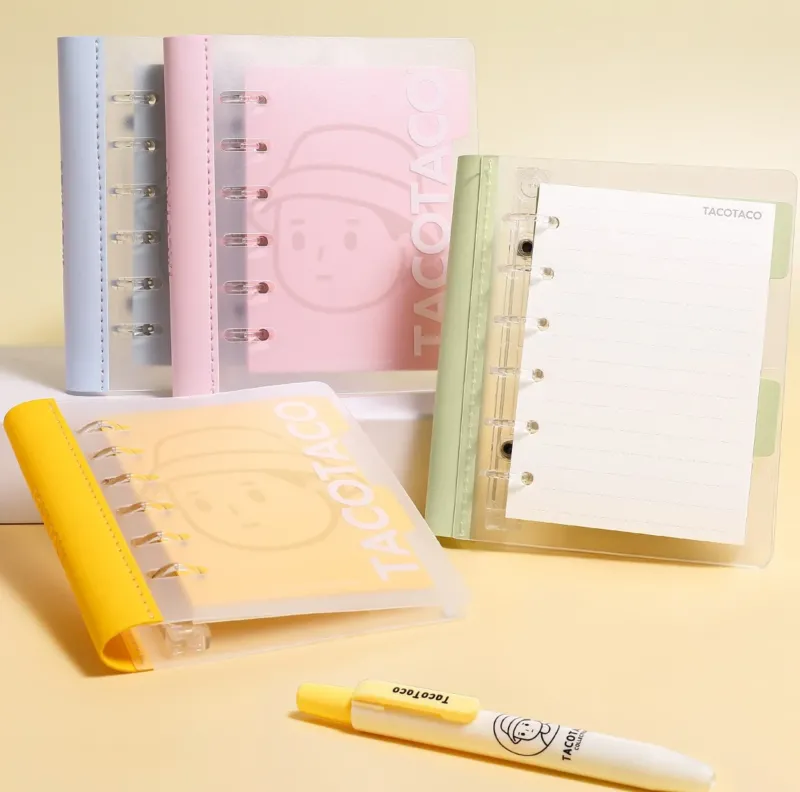
Flip it flat. Flip it all the way around. Write from any angle, in any position, with the cover completely out of the way. The TACOTACO Soft-Cover 360° Flip A7 Loose-Leaf Notebook is a compact traveller’s notebook engineered around two capabilities that standard notebooks do not have: a 360° flip cover that folds completely behind the writing surface for unobstructed one-handed use, and a loose-leaf removable page system that lets you extract, rearrange, and replace individual sheets without tearing. Inside, 80 sheets of 100gsm paper provide a premium writing surface across the full inner block, and 4 tabbed dividers divide the notebook into organised sections from the first use. At 125 × 145mm, it fits in a coat pocket, a small bag, or the palm of one hand. The 4-colour set gives you four notebooks in four coordinated colourways — one for every purpose, project, or mood.
Write standing up. Write on a train. Write with the cover completely folded back. This is that notebook.
Standard spiral-bound notebooks can fold the cover back approximately 180° — but the cover remains alongside the writing surface, adding bulk, catching on surfaces, and interfering with single-handed grip. The TACOTACO’s 360° flip mechanism allows the cover to rotate a full turn, folding completely behind the back of the notebook. The result:
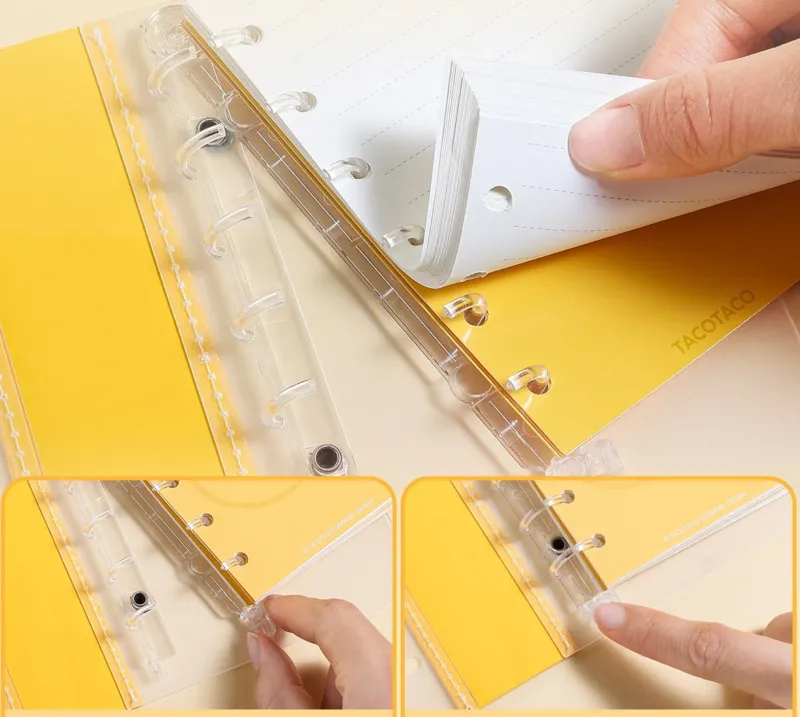
A bound notebook is a permanent record — what goes in stays in, in the order it was written, regardless of whether that serves the user’s needs later. The TACOTACO’s loose-leaf system treats the notebook as a living document: individual sheets can be extracted cleanly from the ring or disc binding, rearranged within the notebook, moved to a different notebook in the set, or filed externally — all without tearing, cutting, or damaging the page. For students who reorganise notes by topic after a lecture, for planners who move undone tasks from last week to this week, and for journal users who want to file completed pages while keeping the notebook active, removable pages change the relationship between the writer and the notebook from archival to operational.
The four included tabbed dividers divide the notebook’s 80-sheet inner block into sections before the first word is written. At 20 sheets per section (with equal distribution), the dividers support:
At 100gsm, the TACOTACO’s inner paper is noticeably heavier than standard notebook paper (typically 70–80gsm). The practical differences in daily writing use:
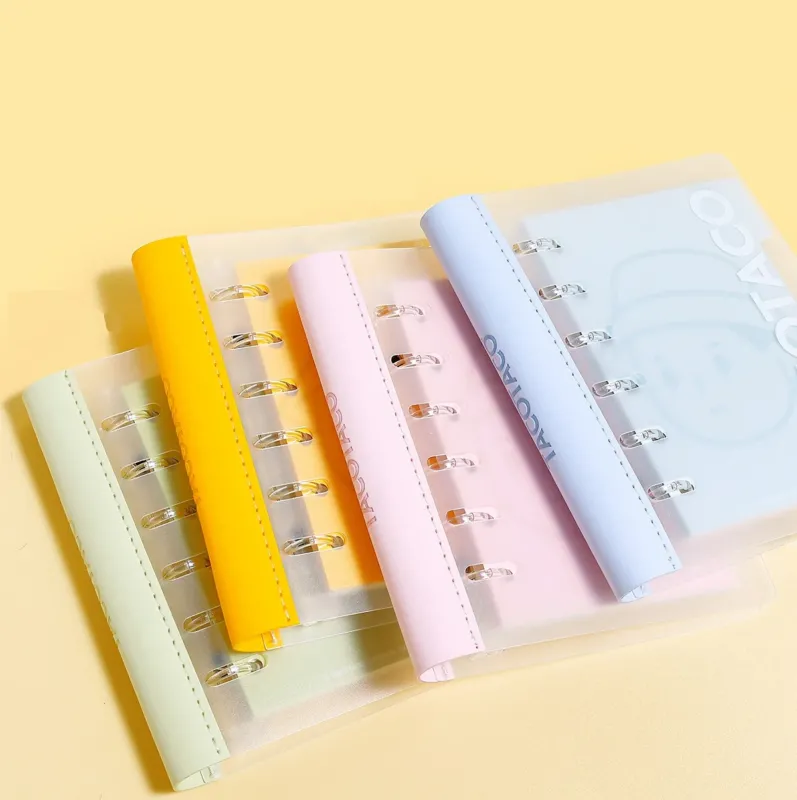
The set includes four notebooks in four coordinated colourways. Assign each colour a purpose — one notebook per project, one per subject, one per life area, or one per mood — and the colour coding does the navigation for you. Please refer to product images for the specific colours included in the set.
A: Yes. The set contains four notebooks, each in a different coordinated colour, all identical in size (125 × 145mm), paper (80 sheets, 100gsm), and included dividers (4 per notebook). Please refer to the product images for the specific colours in this set. The four-notebook format is designed for users who assign a different purpose to each colour.
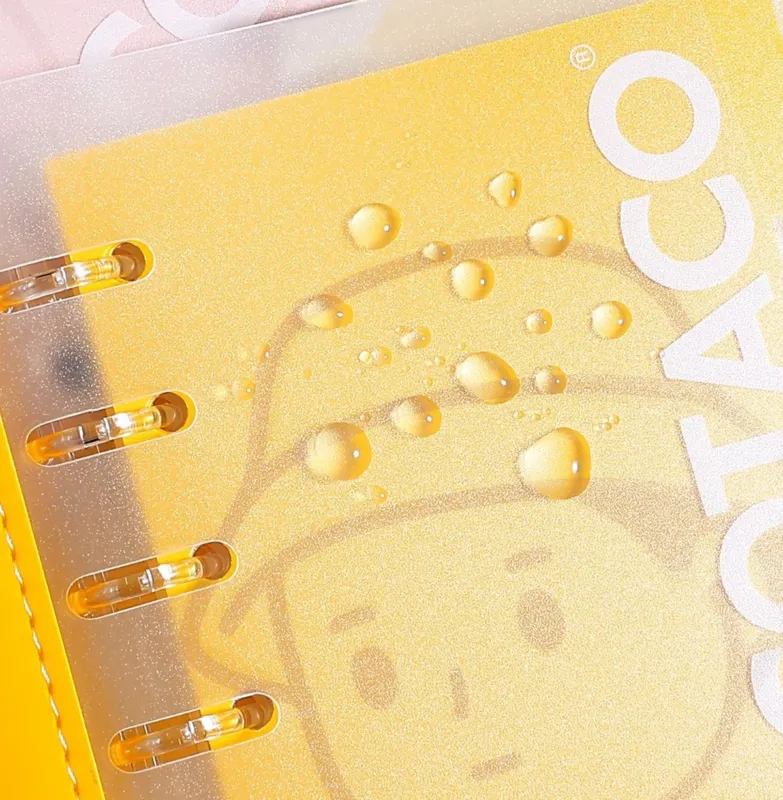
A: The 360° flip is enabled by the ring or disc binding mechanism, which allows the cover to rotate freely around the full circumference of the binding axis. The soft cover material is flexible enough to fold completely flat behind the notebook without creasing or cracking. The binding mechanism itself — not the cover material — bears the rotation stress, so repeated flipping does not damage the cover in normal use. The soft cover is designed for this operation and will not degrade under regular 360° use.
A: Individual sheets are removed by gently flexing the ring or disc mechanism open at the page’s attachment point and sliding the sheet off. Replacement sheets (refill packs compatible with the binding system) are reinserted by reversing the process. The binding mechanism is designed for repeated removal and reinsertion without losing its retention force — pages remain securely held during normal writing use.
A: At 125 × 145mm, the TACOTACO notebook fits in a large coat or jacket pocket, a shirt pocket (tight), a small crossbody bag, or a standard handbag side pocket. It is larger than a true A7 (74 × 105mm) — closer to a square B6 — giving more writing surface than a traditional pocket notebook while remaining compact enough for daily carry without a dedicated bag. It does not fit in a standard jeans trouser pocket.
A: The 100gsm paper is compatible with all standard writing instruments: ballpoint, gel pen, rollerball, fineliner, mechanical pencil, and fountain pen. Fountain pens with wet, broad nibs may show slight ghosting on the reverse side but will not bleed through under normal use. For most pen types including the popular gel and fineliner pens used in journaling and note-taking, 100gsm provides an excellent writing surface with minimal show-through.
A: Please check our current listings for compatible refill paper packs for the TACOTACO 360° Flip binding system. Refill availability allows the notebook cover to be retained as a long-term object while the paper block is replaced when full — a more sustainable and economical approach than replacing the entire notebook.
A: The dividers are unlabelled tabs — you assign each tab its own category, subject, or function. This blank-tab design is intentional: it allows any organisational system to be applied rather than forcing the user into a pre-defined structure. Write on the tabs with a fine-tip pen or use tab stickers to label them.
A: The Hobonichi Techo is a dated diary/planner in Tomoe River paper — a specific product with a fixed calendar structure and ultra-thin paper optimised for fountain pens. The Midori Traveler’s Notebook is an elastic-band cover system accepting passport-size or regular-size inserts — customisable but not loose-leaf. The TACOTACO 360° Flip is distinct from both: a loose-leaf ring-bound system with 360° flip capability, 100gsm paper (heavier than Tomoe River), and removable/rearrangeable pages — more operationally flexible than either, at a more accessible price point. The right choice depends on whether dated structure (Hobonichi), aesthetic layering (Midori), or page-level flexibility (TACOTACO) is the primary priority.